





Fondation Maeght
There are places you visit for the art, and places where the art has become inseparable from the place itself. Fondation Maeght is very much the latter.
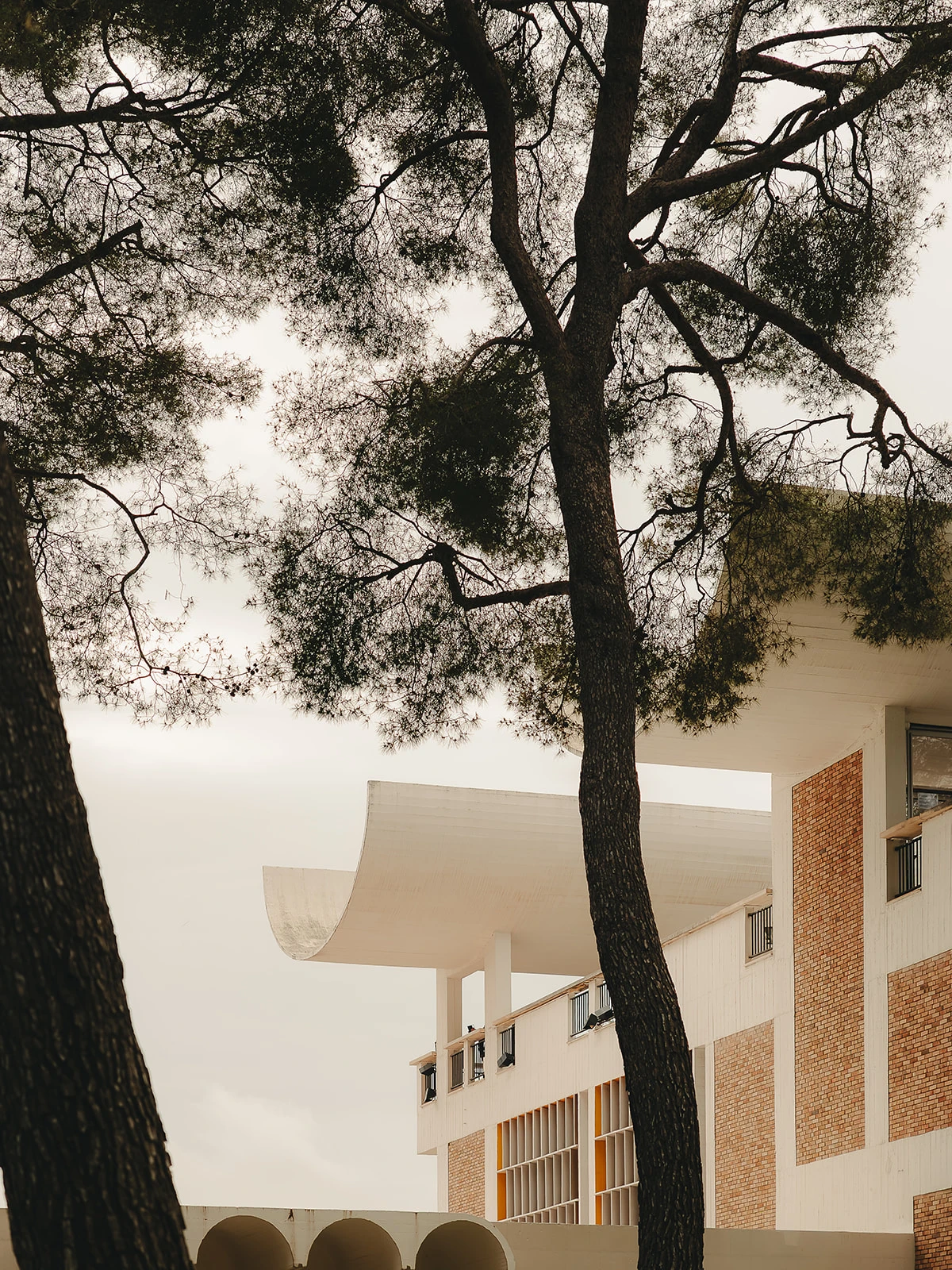 Just outside the medieval village of Saint-Paul de Vence, the foundation brings together modern art, architecture, sculpture and landscape in a way that still feels remarkably fresh more than sixty years after it opened. Miró, Giacometti, Calder, Chagall, Braque and many others are part of its story, but what makes Maeght so special is not simply the quality of the artists. It is the fact that many of them were involved in creating the place itself.
The story behind it
The story begins with Marguerite and Aimé Maeght, an art-dealer couple whose Paris gallery became one of the most important meeting points for artists, writers and poets of post-war Europe. Their relationships with artists were unusually close. Miró, Braque, Chagall and Giacometti were not simply artists they represented; they became friends.
In the early 1950s, the Maeghts travelled to the United States and visited the Barnes Collection, the Phillips Collection and the Solomon R. Guggenheim Foundation. The experience encouraged them to imagine something new in France: not simply another gallery or museum, but a place where art could be lived with, seen in different surroundings and brought into conversation with architecture and nature.
A turning point came in 1953, when the Maeghts lost their youngest son, Bernard, to leukaemia. Their close circle of artist friends helped them through the loss, Georges Braque, in particular, encouraged them to undertake something that might help them move beyond their grief: to create a new kind of place where artists could work and exhibit outside the confines of a conventional gallery. The idea gradually took shape, and Joan Miró introduced Aimé Maeght to the Catalan architect Josep Lluís Sert, who had designed Miró's studio in Palma de Mallorca. Sert would eventually design the foundation. Saint-Paul de Vence, where the Maeghts already had a home, became the setting.
The Fondation Maeght opened on 28 July 1964, inaugurated by André Malraux, then France's Minister of Culture. It was the country's first private foundation devoted to modern art.
But what Sert and the Maeghts created was very different from the museum model of the time.
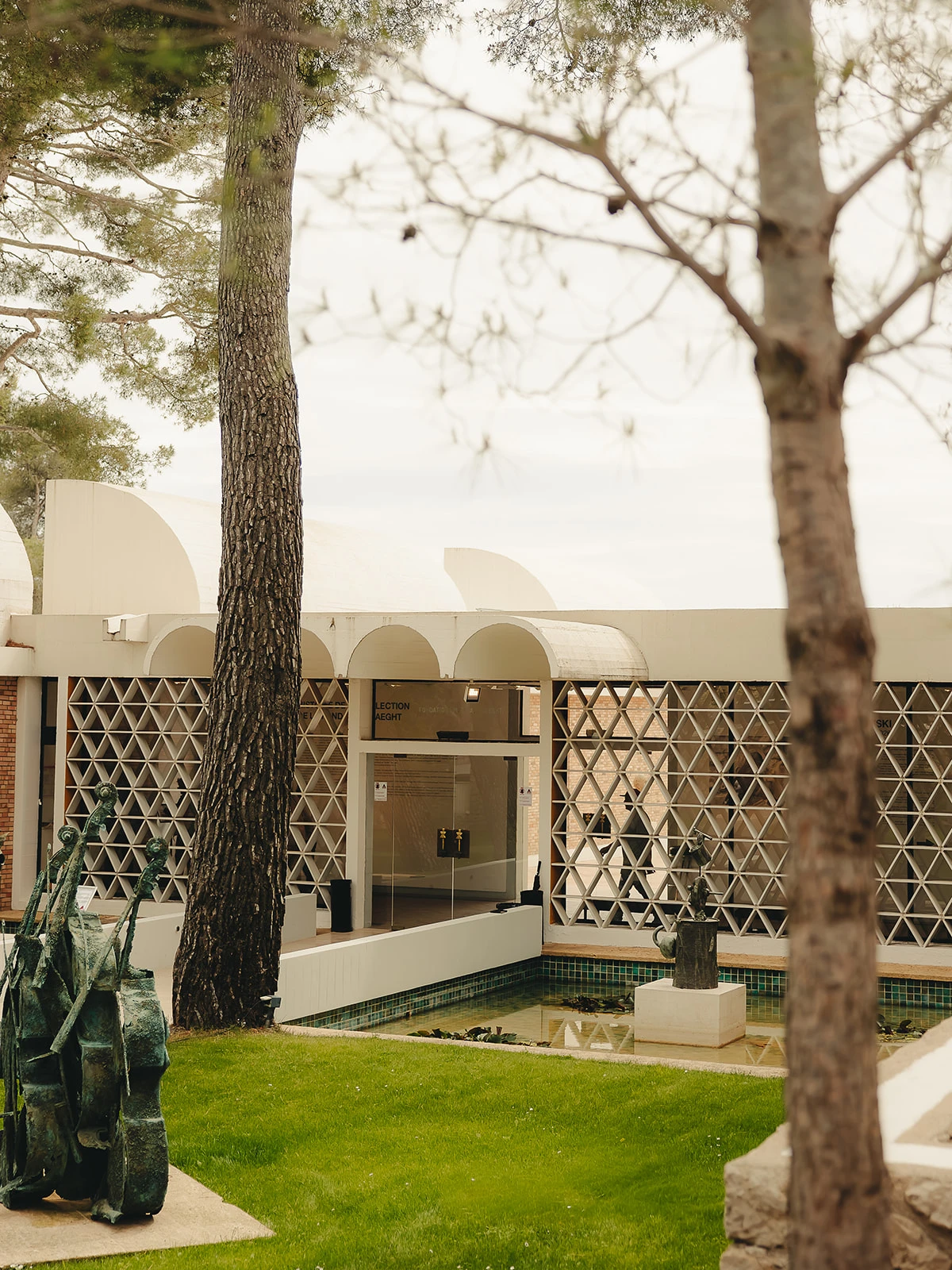
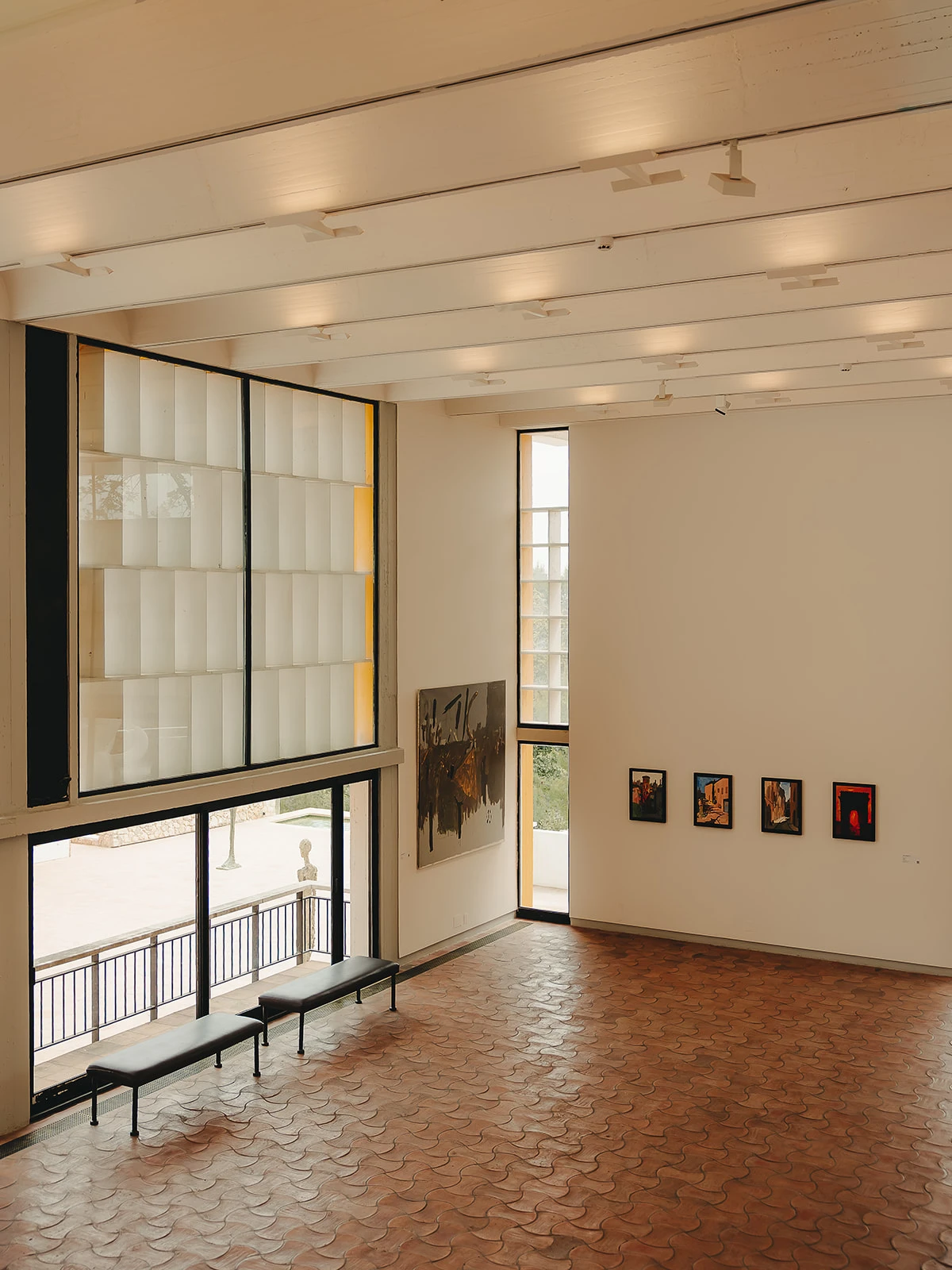
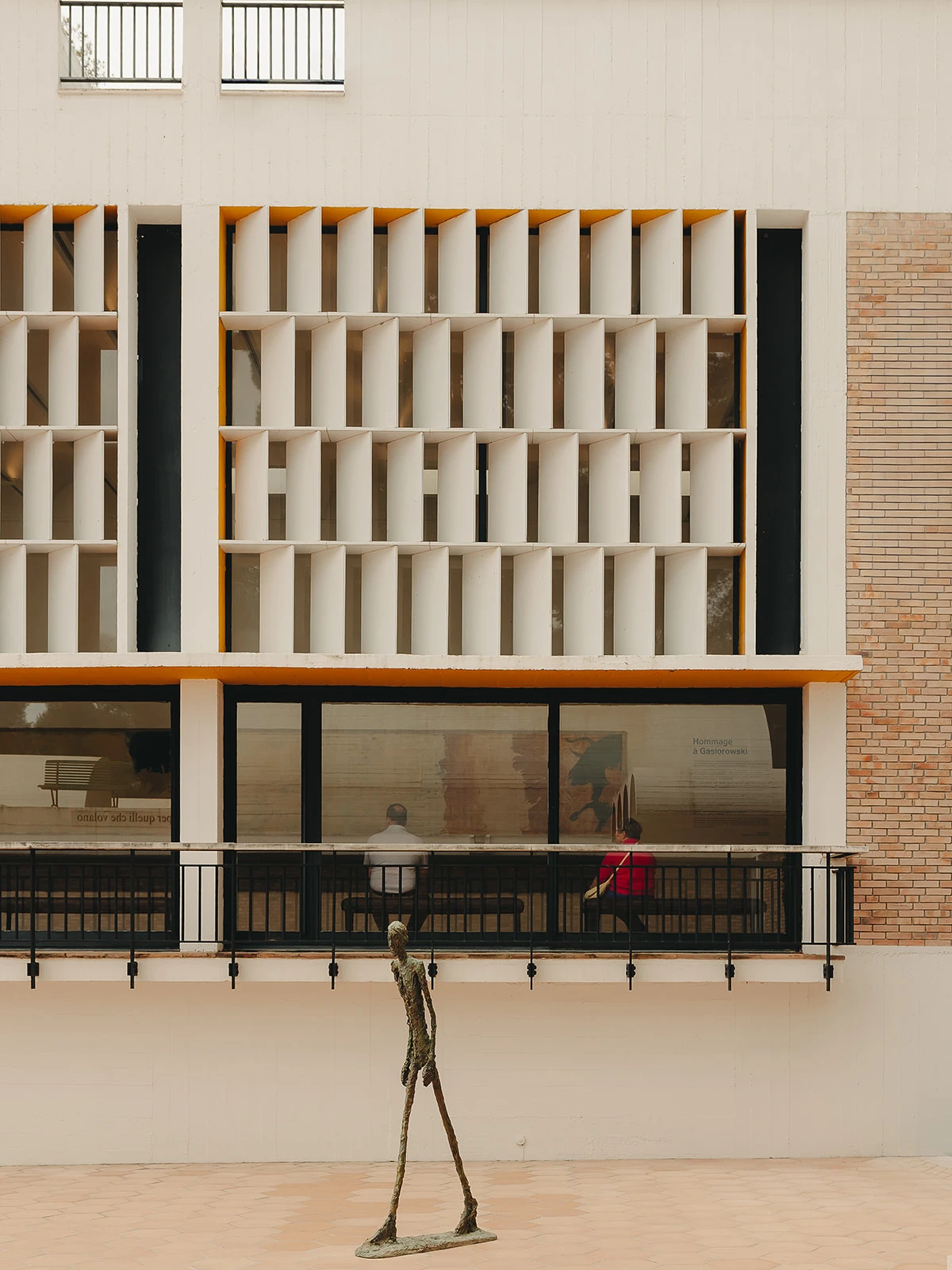
The artists were involved from the beginning, creating works specifically for the building and its surroundings. Sert designed the foundation almost like a Mediterranean village, with courtyards, terraces, patios and interconnected spaces rather than one imposing museum building. He used simple materials — brick, terracotta, concrete and stone — and allowed the architecture to sit within the surrounding landscape.
That is the key to understanding Maeght. You are not simply walking through galleries looking at paintings on white walls. The building, the garden and many of the works were conceived as one thing.
Art and architecture together
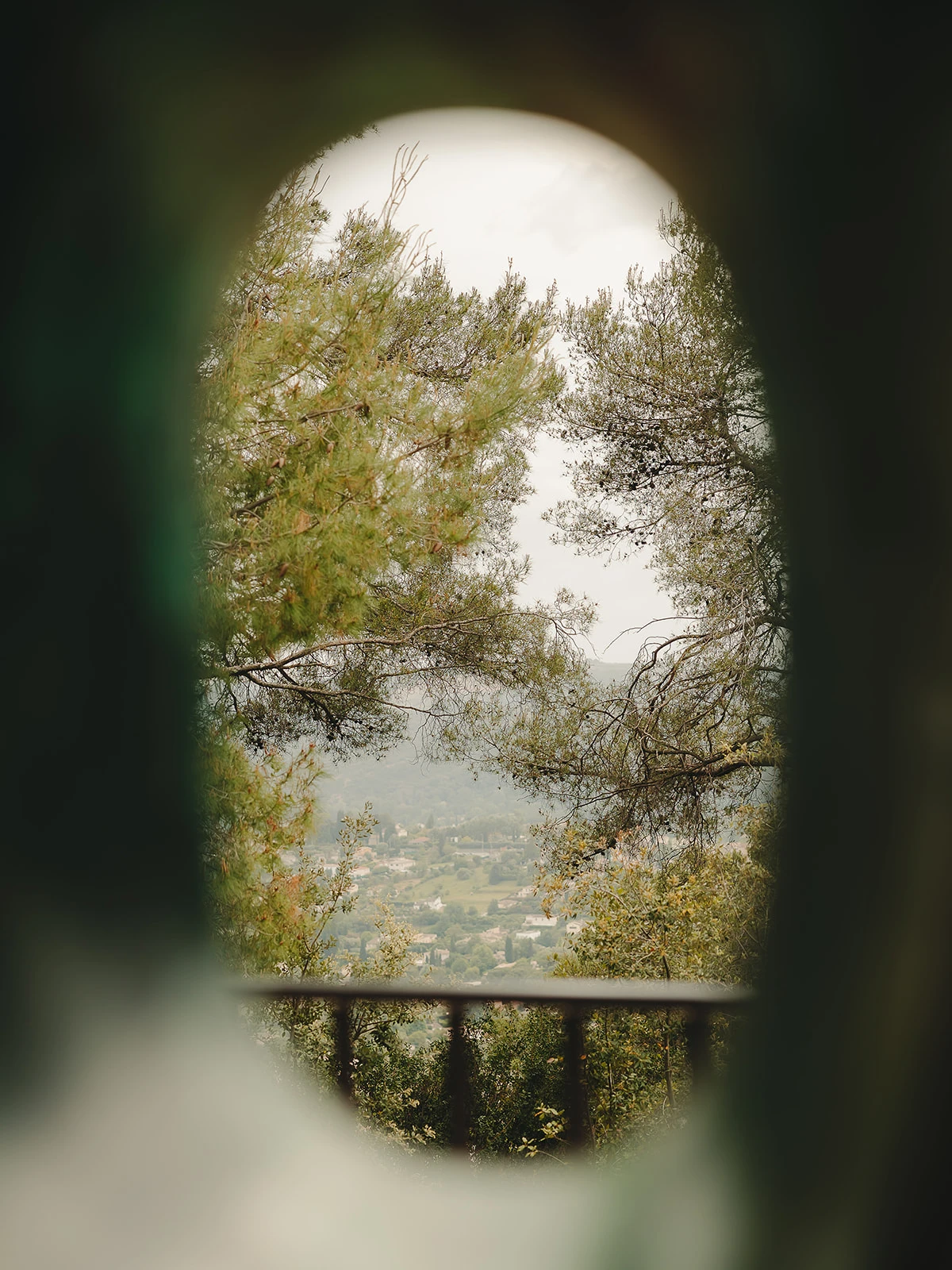
As you move through the foundation, the distinction between artwork and architecture keeps disappearing.
There is the Cour Giacometti, the chapel, the courtyards and terraces, the mosaics by Chagall and Tal Coat, Braque's extraordinary pool and stained-glass work, and Miró's labyrinth outside. Each was made specifically for the foundation or integrated into its architecture.
One of the most beautiful examples is Georges Braque's Bassin aux poissons, or Les Poissons. The enormous mosaic pool was created in 1963 as part of the original project, using simple forms and colours in a work that is both sculpture and architecture. It is exactly the kind of work that makes the Maeght experience different from seeing Braque in a gallery: here, you encounter his work as part of the fabric of the place.
Marc Chagall also created works specifically for the foundation. His mosaic Les Amoureux, made in 1964–65, is outside the library and depicts Marguerite and Aimé Maeght welcoming visitors. It was the first work Chagall made using this technique.
And then there is Miró
Miró's Labyrinth
The Labyrinthe Miró is perhaps the clearest expression of what the Maeghts were trying to achieve.
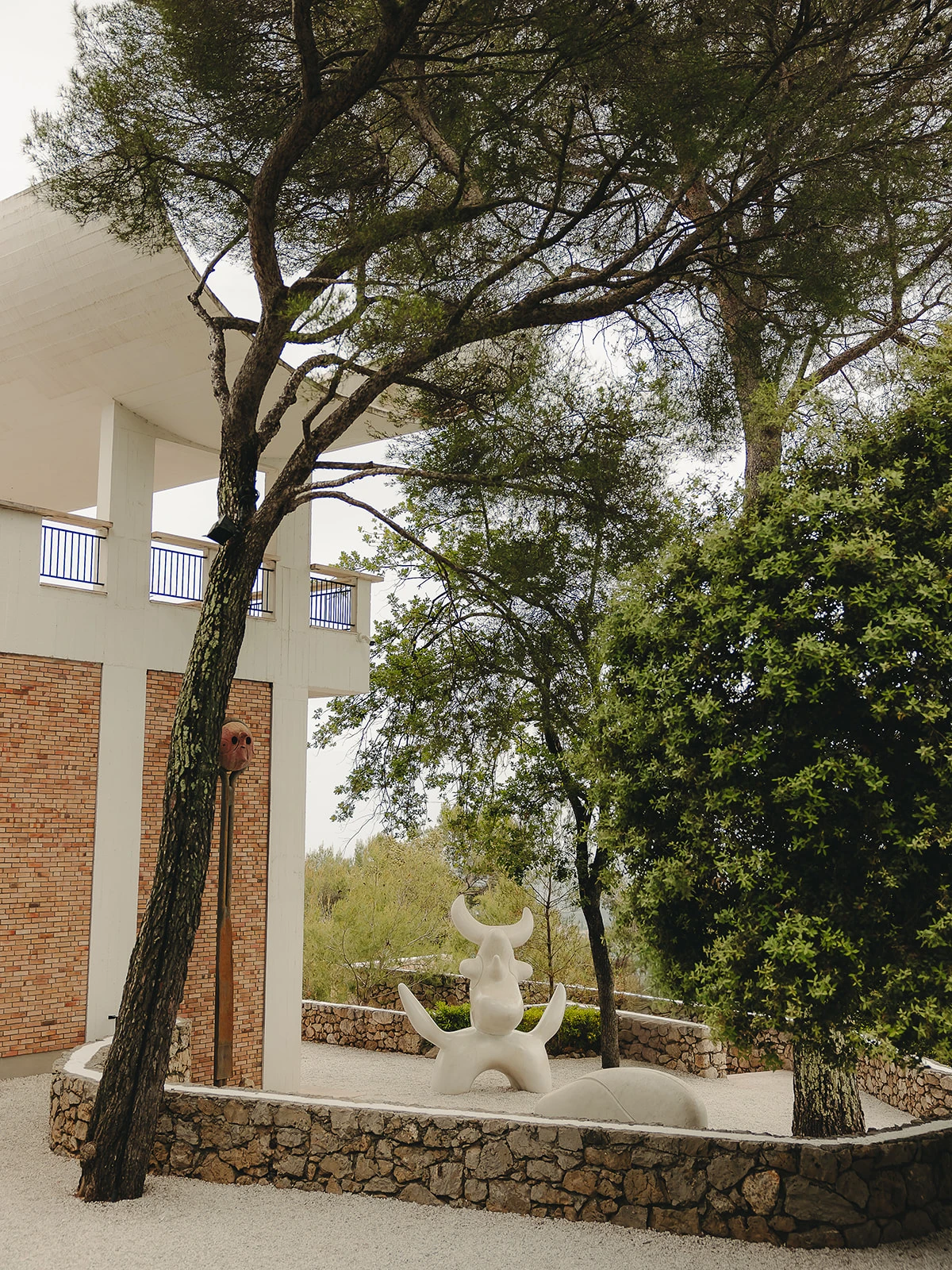
It isn't a sculpture garden in the conventional sense. It is an entire landscape created by Miró in collaboration with Sert and the Catalan ceramicist Josep Llorens Artigas and his son Joan. The project began around the opening of the foundation and continued for years afterwards, with works added in 1968 and 1973.
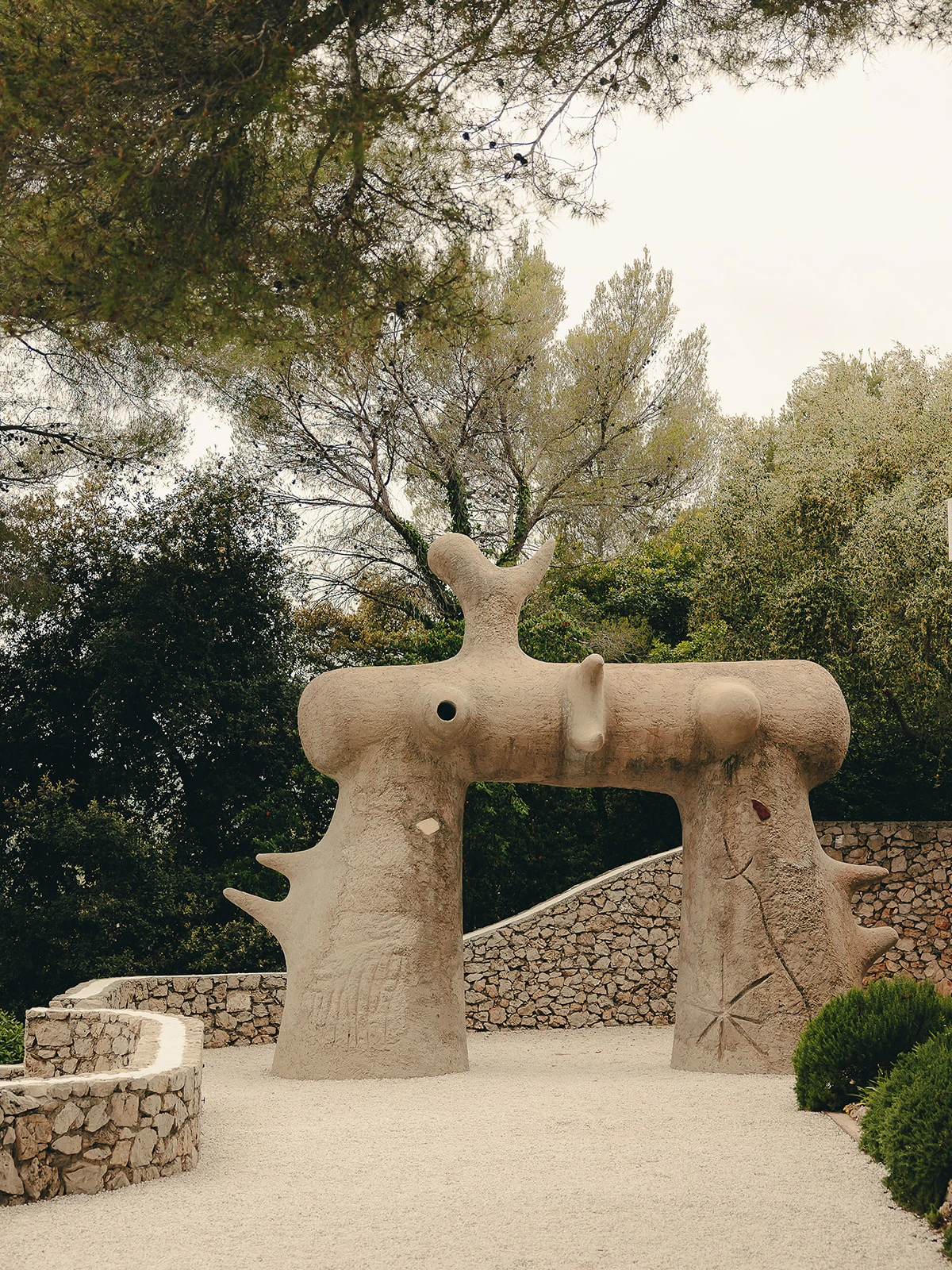
There are around twenty works spread across several terraces, using materials as varied as ceramic, Carrara marble, iron, bronze and concrete. There are pools, walls, gargoyles, strange creatures, birds and abstract forms. Miró's L'Arc, for example, is an enormous concrete sculpture weighing around 30 tonnes, its rough surface engraved with a pneumatic drill.
The effect is wonderfully unlike a conventional sculpture garden. You don't stand in front of a sculpture and then move on to the next. You walk through Miró's world, following paths and terraces, with the works appearing around corners and across the water.
Even the materials matter. Ceramic catches the sun differently from concrete; marble changes with the light; water brings movement into the composition. Miró's work becomes part of the landscape rather than something placed upon it.
Giacometti, Calder and the sculpture garden
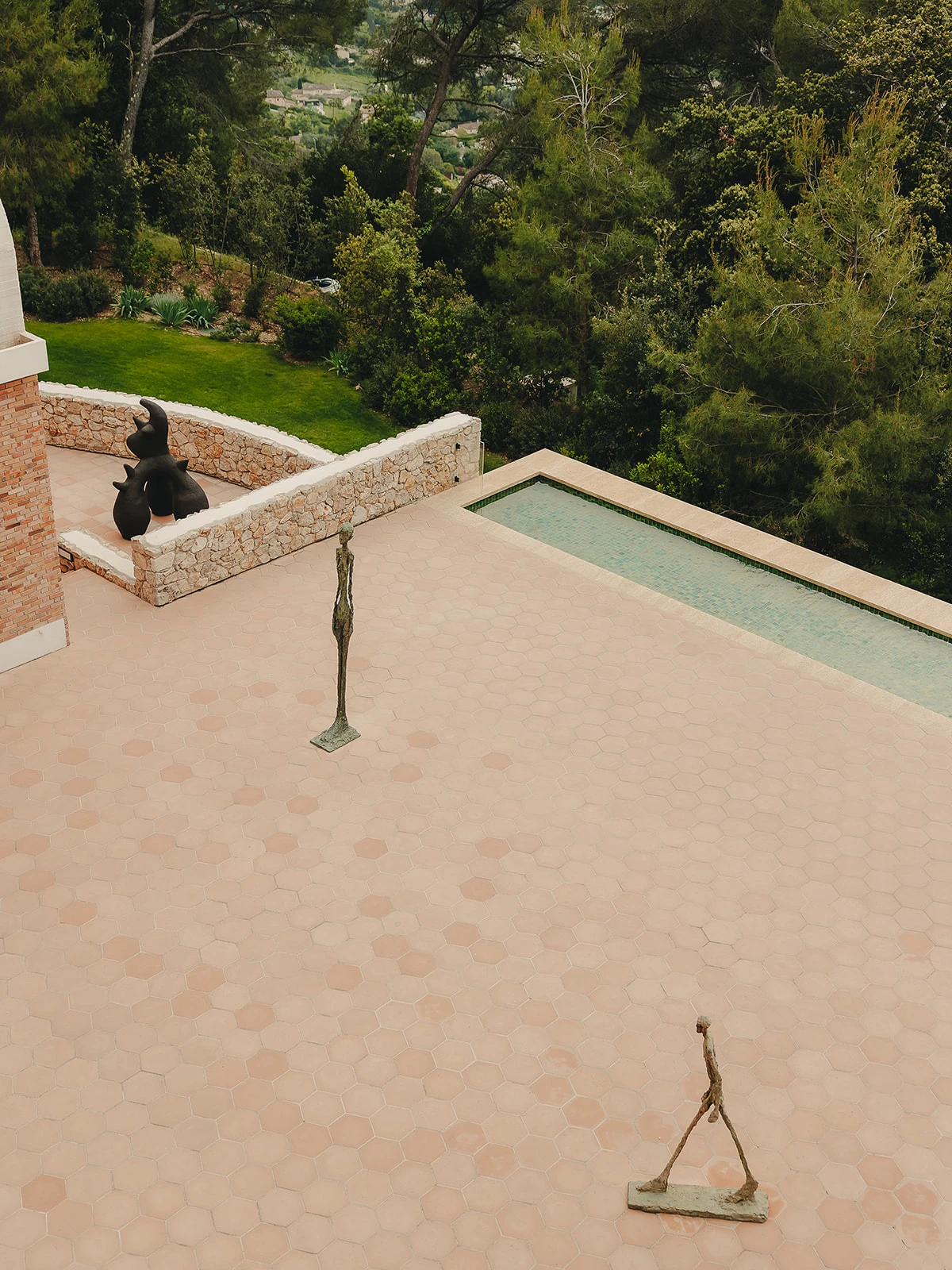
Alberto Giacometti has an equally strong presence. His elongated figures seem almost made for the foundation's courtyards, while the Cour Giacometti brings his work into direct conversation with Sert's architecture.
There is also Alexander Calder's monumental Les Renforts, a 5.70-metre-high stabile created in 1964 for the sculpture garden. Unlike Calder's mobiles, which depend on movement, the stabile is fixed and architectural, almost like a piece of abstract steel architecture rising from the garden.
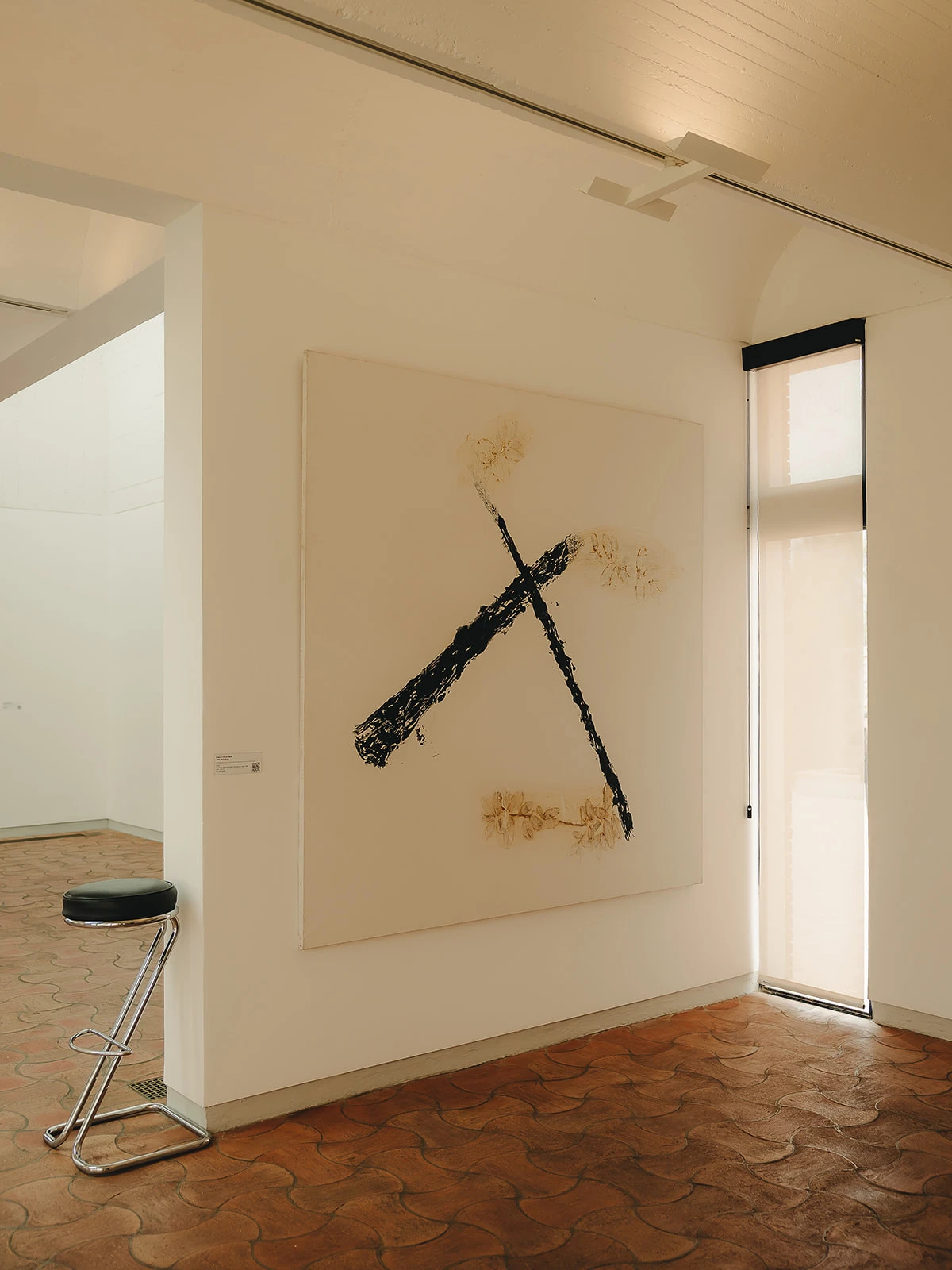
The collection has grown considerably since 1964. Today the foundation holds more than 13,000 works spanning painting, sculpture, drawing, graphic art, stained glass, installations and fountains. Alongside the artists who shaped the original foundation are later generations including Eduardo Chillida, Joan Mitchell, Pierre Soulages, Ellsworth Kelly, Jean-Paul Riopelle and others.
That means there is much more to see than the famous names associated with the foundation's beginnings. The permanent collection continues to develop, while temporary exhibitions bring a changing contemporary perspective to the historic spaces.

The artists were everywhere
One of the things I find most appealing about the Maeght story is how little separation there was between the art, the artists and everyday life.
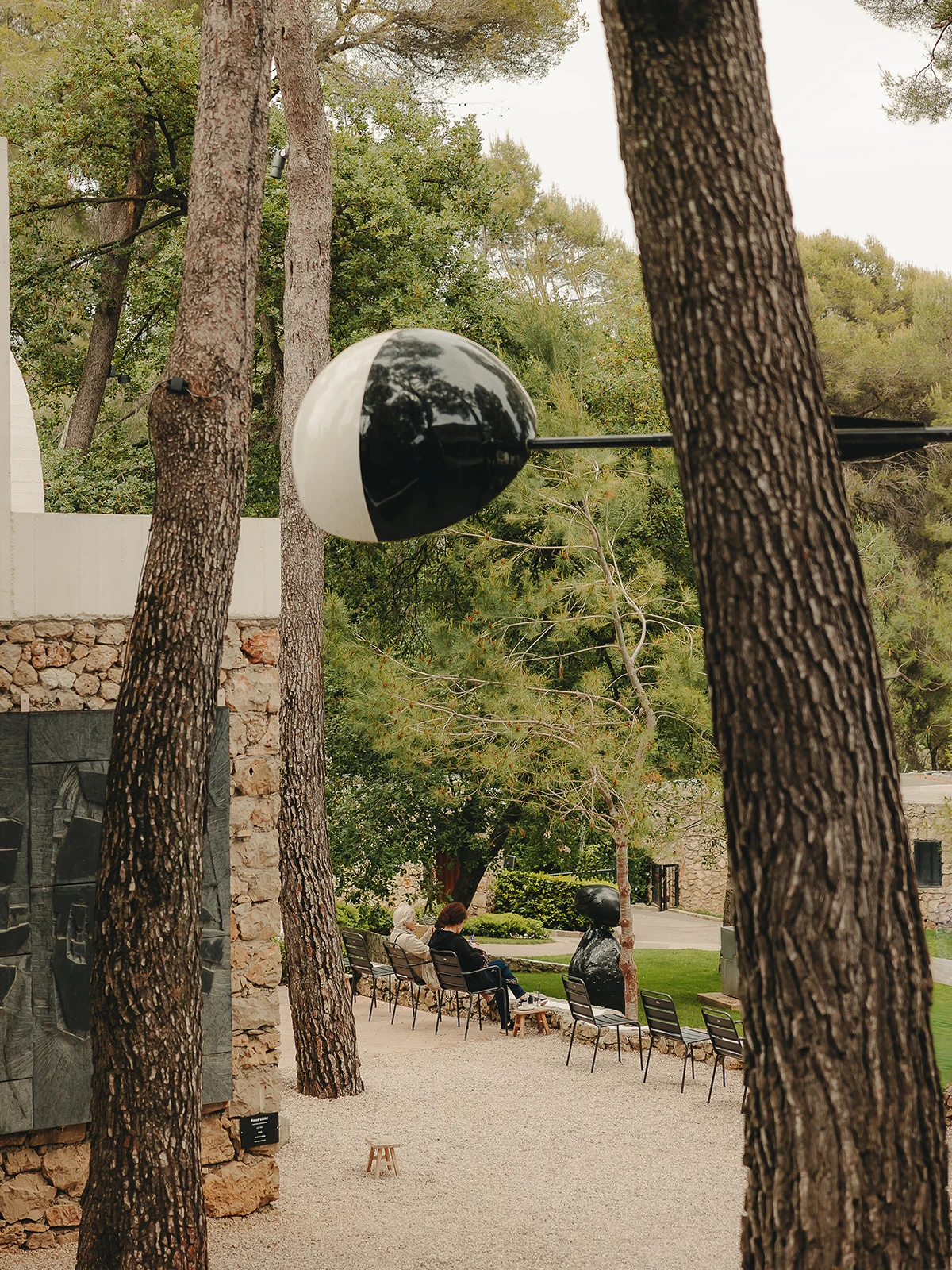
Diego Giacometti, Alberto's younger brother, designed the foundation's outdoor café for the Maeghts. He created the bar, stools, counter and large outdoor lights, turning what could have been an ordinary museum café into another piece of the collection.
And the Maeghts' relationship with artists extended beyond exhibitions.
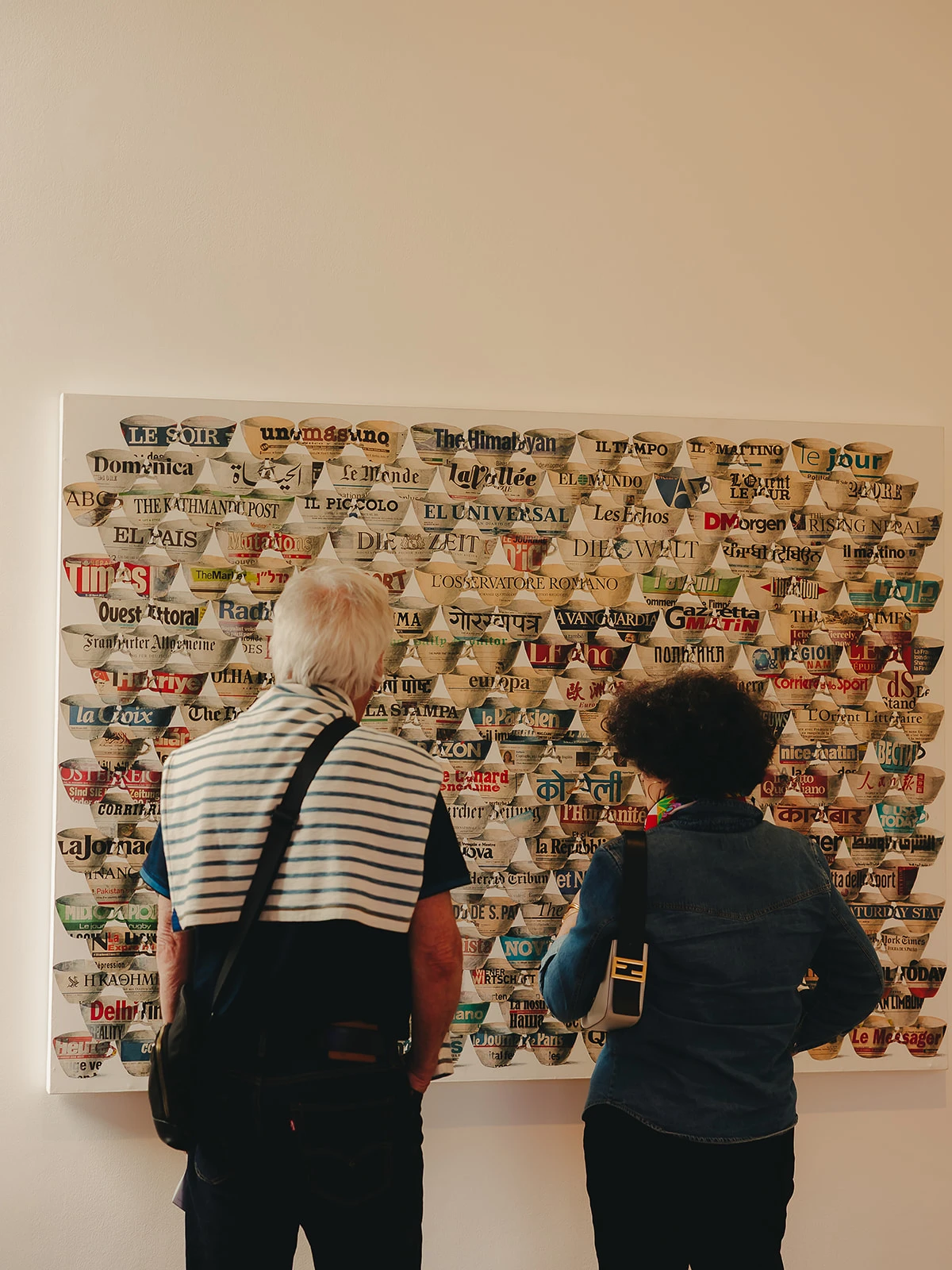
In 1946, Aimé Maeght created Derrière le Miroir to accompany exhibitions at his Paris gallery. It became one of the great publishing projects of modern art, bringing together artists and writers in beautifully produced editions, often with original lithographs made especially for them. Over more than 35 years, artists including Miró, Chagall, Braque and Giacometti appeared alongside writers such as René Char and Samuel Beckett.
It gives you a sense of the world the Maeghts inhabited. Art wasn't confined to a gallery wall. It extended into books, architecture, gardens, friendships, food and conversation.
More than a museum
That spirit is still part of Fondation Maeght today. The programme extends beyond exhibitions, with concerts, readings, performances, workshops and other events taking place throughout the year. The foundation's summer programme, for example, includes creative workshops inspired by artists and works in the collection.
But you don't need to know much about modern art to appreciate the place.
You can come for Miró's labyrinth and find yourself looking at the architecture. You can come for Giacometti and end up noticing Diego's furniture. You can come for the sculpture garden and discover Braque's mosaic pool or Chagall's mosaics along the way.
That is what makes Fondation Maeght such an important part of Saint-Paul de Vence for me. It isn't really separate from the village's history as a meeting place for artists. It is the continuation of that story, but translated into architecture, gardens and works of art that were created specifically for this landscape.
And perhaps that is the most interesting thing about it: more than sixty years after it opened, the Fondation still feels less like a museum containing art than a place that was created by artists.
 All articles