

Pastis, pétanque and Porquerolles
On a sunny autumn morning, we took the fifteen-minute boat ride from Hyères to Porquerolles. There was just enough time for a coffee on the front deck, sitting in the sun as the coastline slowly disappeared behind us.
I had been wanting to visit the Fondation Carmignac for a while, but I was also curious to see the island outside the summer season, when the beaches are quieter and the village returns to its everyday rhythm.
 A table in the village
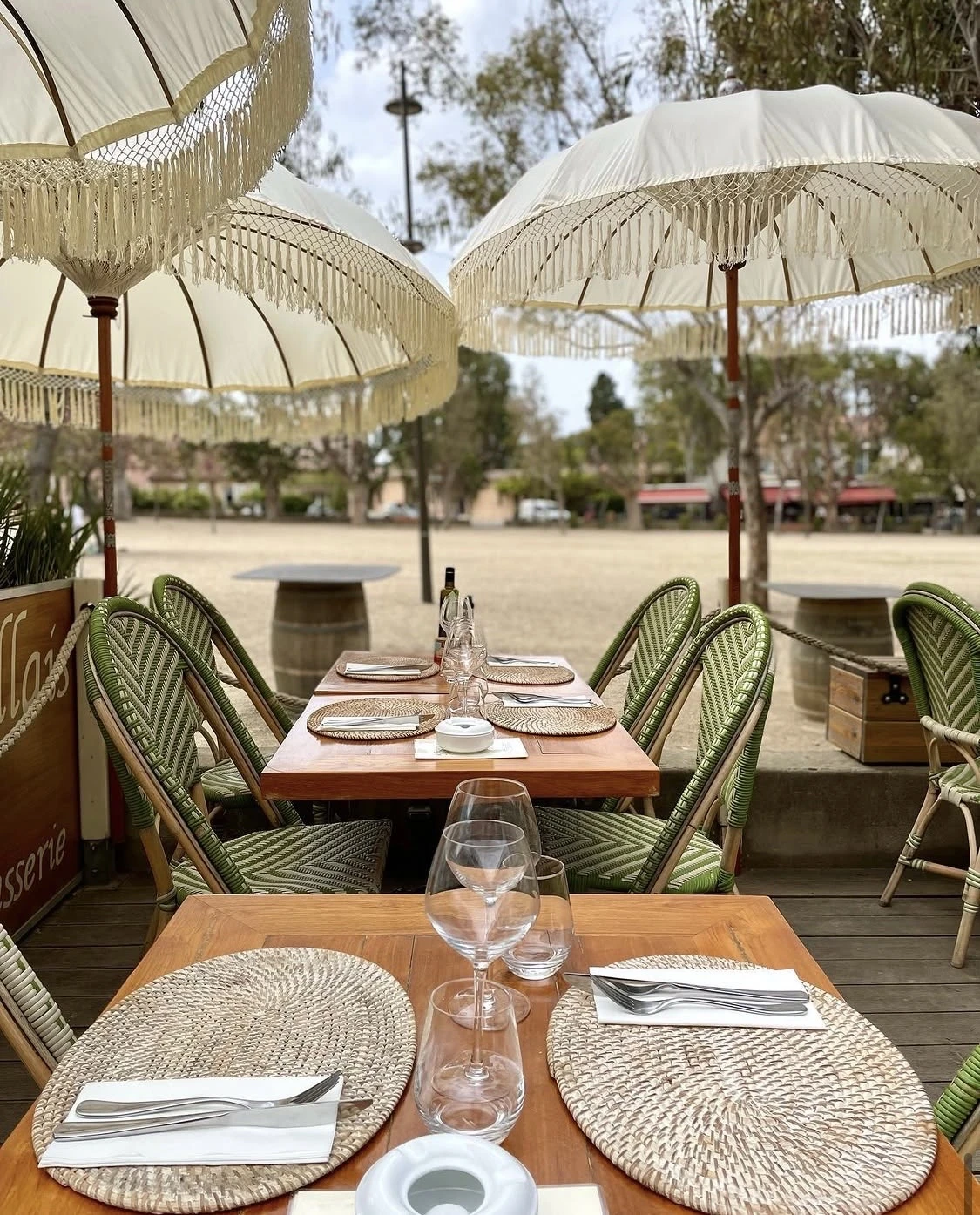
We walked straight from the harbour to Le Porquerollais, a small hotel and restaurant on the village square. It’s my favourite place to stay on the island, somewhere you feel at home almost as soon as you arrive.
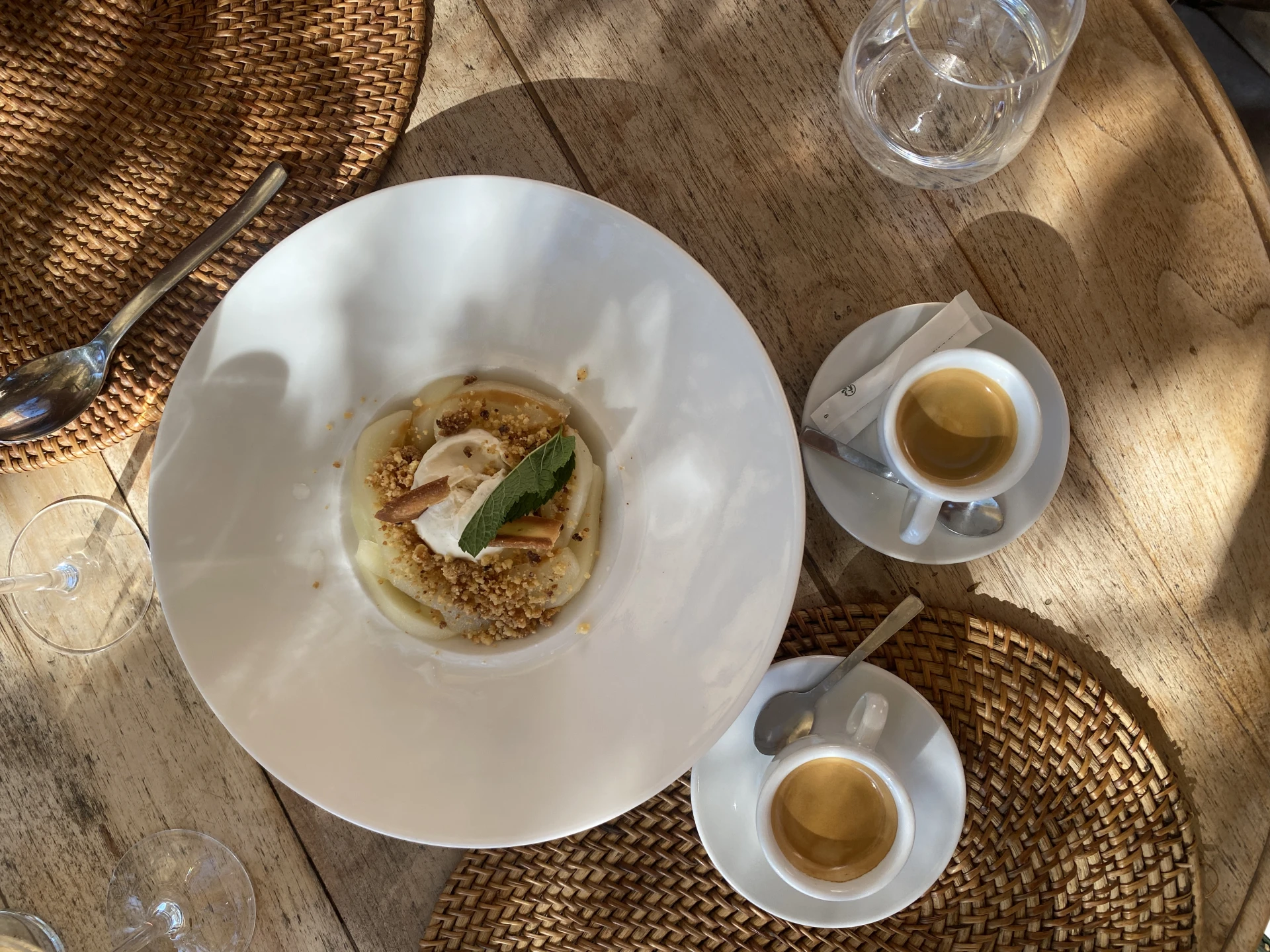
The restaurant has a small terrace with wicker chairs and parasols whose fringes move in the breeze. We sat down for lunch, ordering ceviche and a glass of local white wine from Domaine de la Courtade. The atmosphere was relaxed. People came by to say hello, stopped for a chat and then went on with their day.
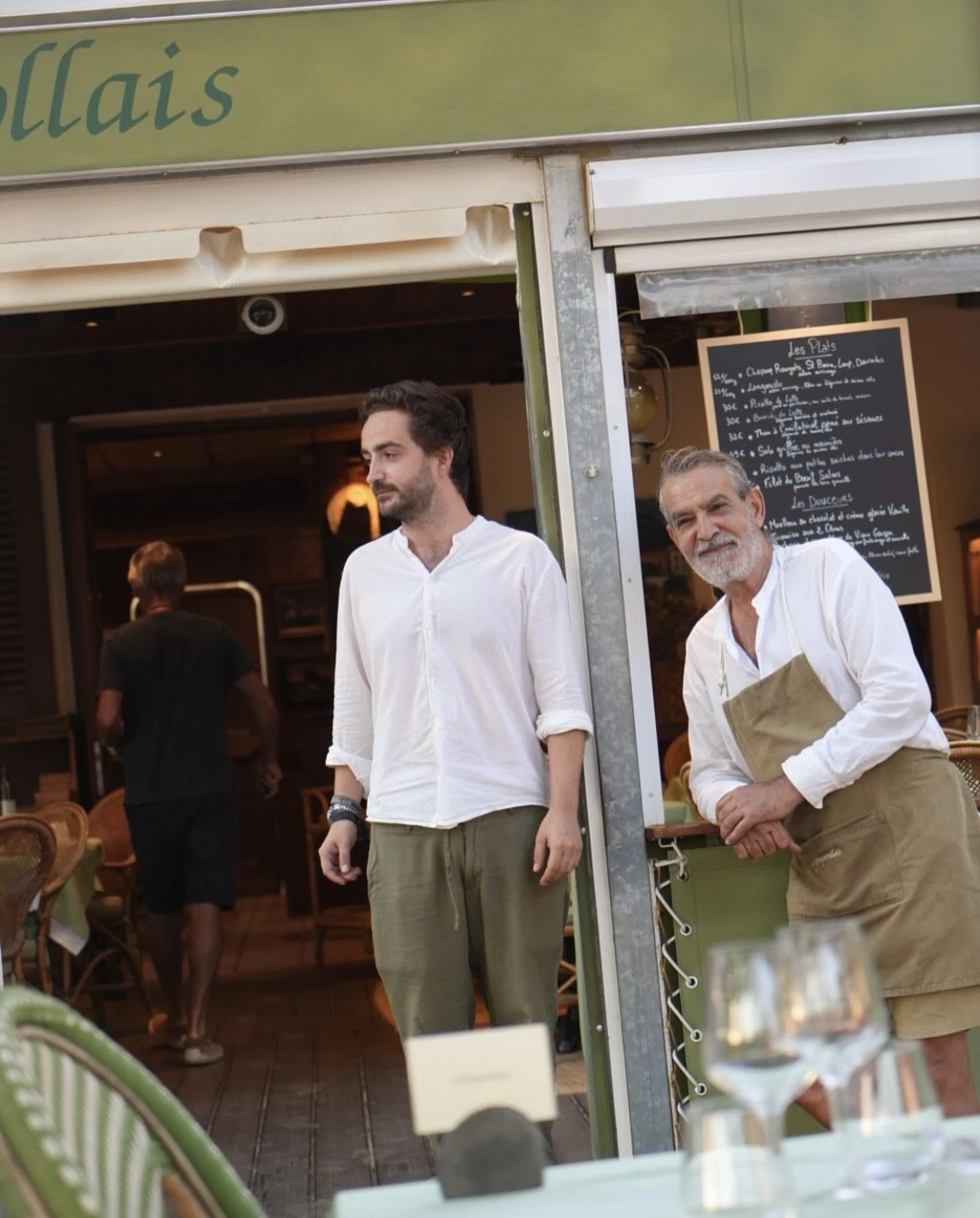
Jalil Nourazar was there to welcome us. He has worked at Le Porquerollais for 20 years and has lived on the island for just as long. As we talked, I discovered that he had written a book, De Persepolis à Porquerolles, about his journey from Iran to the island. An Iranian exile, he had found the courage and opportunity to leave his country and eventually build a new life here, finding serenity in serving others. It was a story I hadn't expected to discover over lunch on the village square.
A blue bike and a quiet beach
We rented a classic blue bicycle and set off towards Plage Notre-Dame, often described as one of the most beautiful beaches in Europe. Backed by pine trees, with pale sand and clear turquoise water, it is easy to see why it attracts so many visitors.
In summer, the beach is a popular spot. On an autumn afternoon, we practically had it to ourselves.
At least, for a little while.
Then a school class arrived. Within minutes, the quiet was replaced by the excited chatter of thirty children, who seemed to have brought the energy of an entire summer holiday with them. We watched them take over the beach, and somehow it made the place even better. There was no picture-perfect silence to preserve, just a beach being enjoyed.
What I liked just as much were the smaller coves we discovered elsewhere on the island. Away from the better-known beaches, we came across little stretches of sand between the rocks and quiet spots reached by paths through the woods. They felt hidden, the kind of places you might otherwise pass by without knowing they were there.
Art beneath the trees
The Fondation Carmignac was one of the main reasons for our visit. Set among pine trees and Mediterranean gardens, the foundation occupies an old farmhouse that appeared in Jean-Luc Godard's 1965 film Pierrot le Fou, starring Jean-Paul Belmondo and Anna Karina.
French art collector Édouard Carmignac created the foundation to share his collection with the public. Sculptures are scattered among the trees and native vegetation, while much of the gallery lies beneath the landscape. A shallow pool of water forms the ceiling above the exhibition rooms, filtering daylight into the spaces below.
You explore the galleries barefoot, which I think every museum should do. Somehow, being barefoot makes you feel more connected to the place.
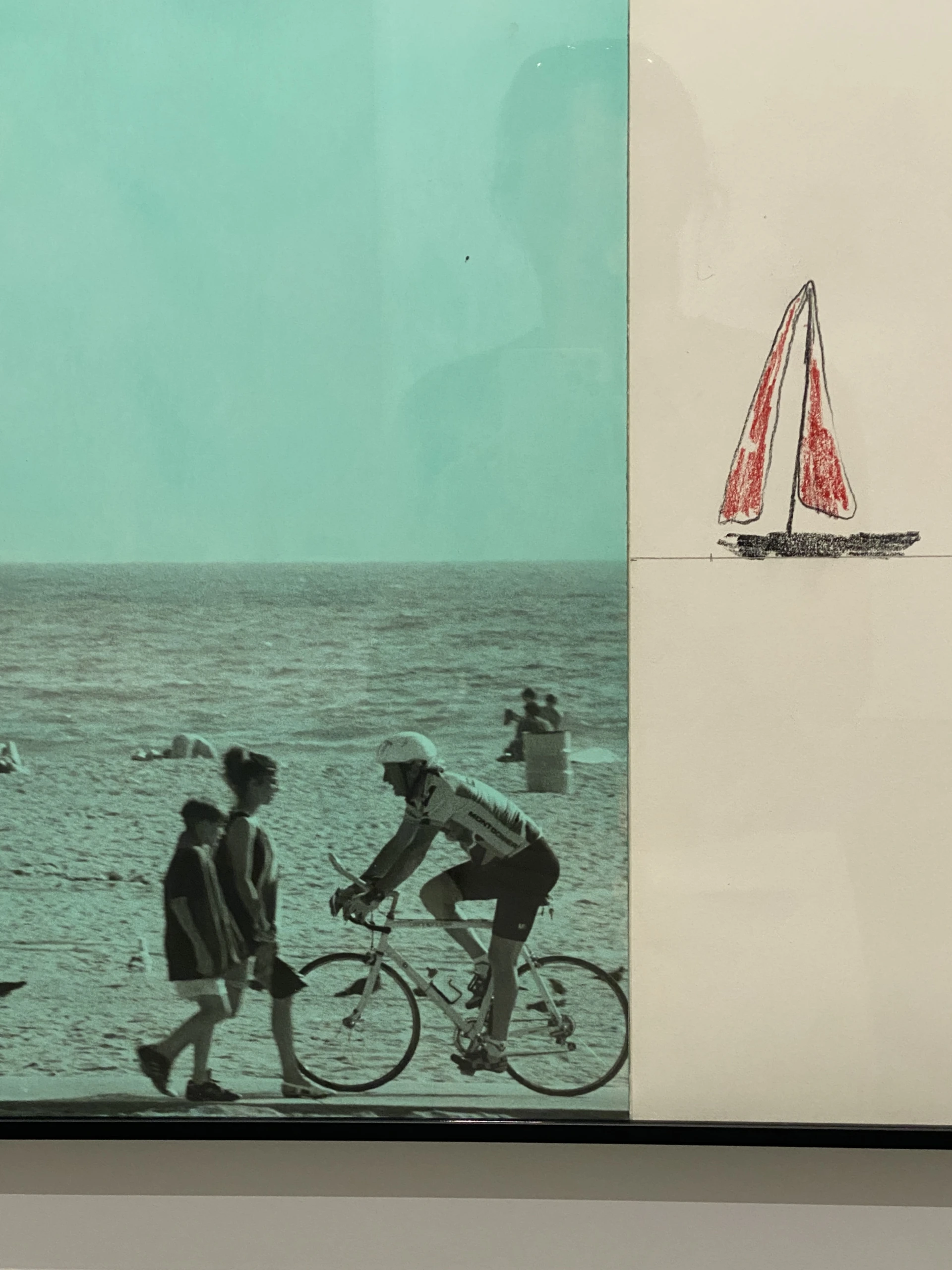
We visited SEA, POP & SUN, an exhibition looking at the art and culture of the 1960s and 1970s. I've always been fascinated by the 1960s, a decade of political upheaval and profound social change. Established ideas about authority, gender roles and personal freedom were being challenged, while music, art and popular culture became ways of expressing a changing world.
The exhibition brought these worlds together through artworks and songs from the period. Lucy in the Sky with Diamonds, California Dreamin’ and You Don't Own Me were among the songs playing alongside works that expressed the same spirit of the time. I liked seeing and hearing how artists and musicians were responding to the world around them, each in their own way. It gave the exhibition a sense of the period that you might not get from looking at the artworks alone.
The exhibition closes on 1 November, when the foundation shuts for the winter. It reopens in spring with a new programme.
Pastis and pétanque
By the time we cycled back to the village, the afternoon was drawing to a close. At Le Porquerollais, people were gathering for their evening game of pétanque.
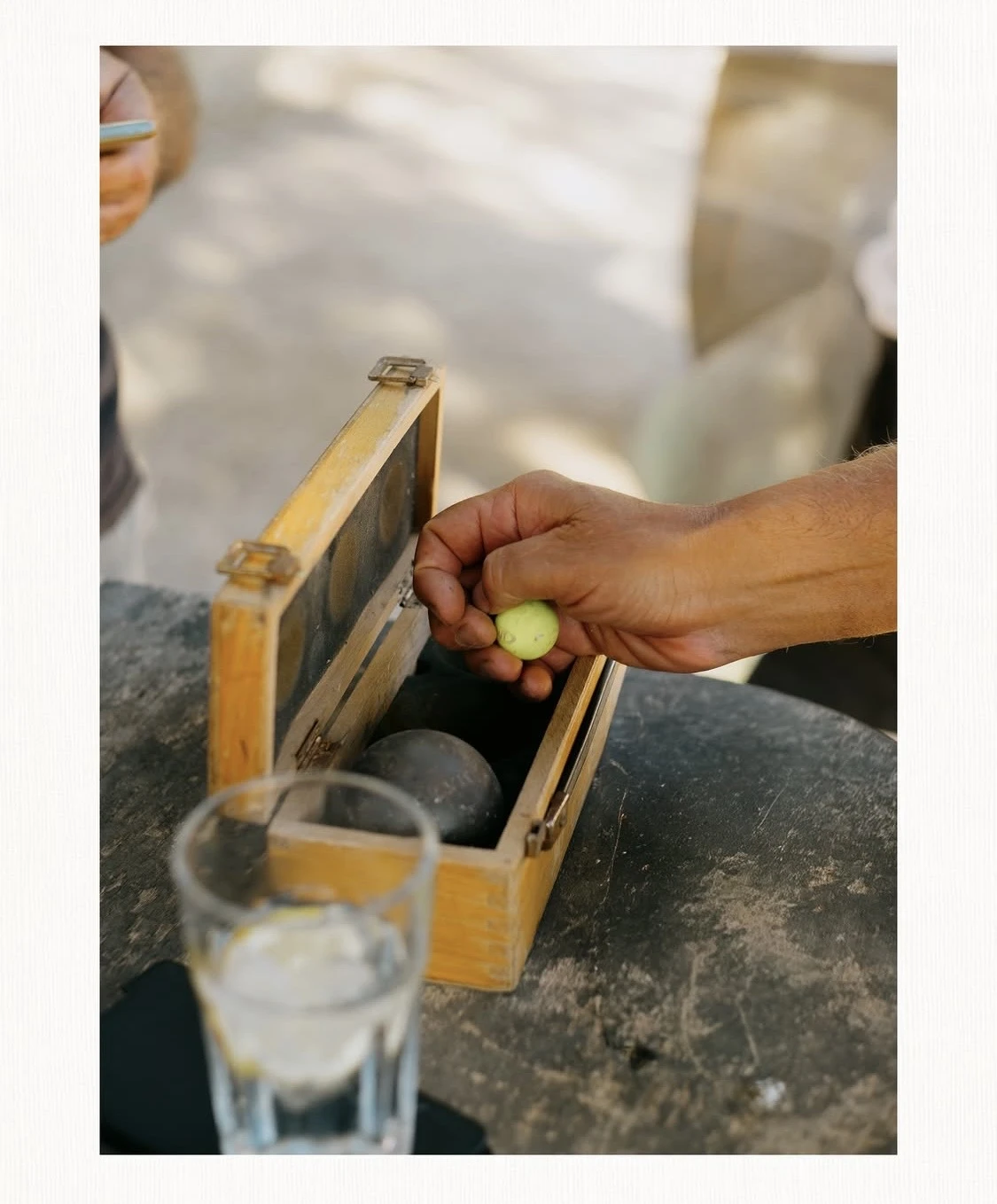
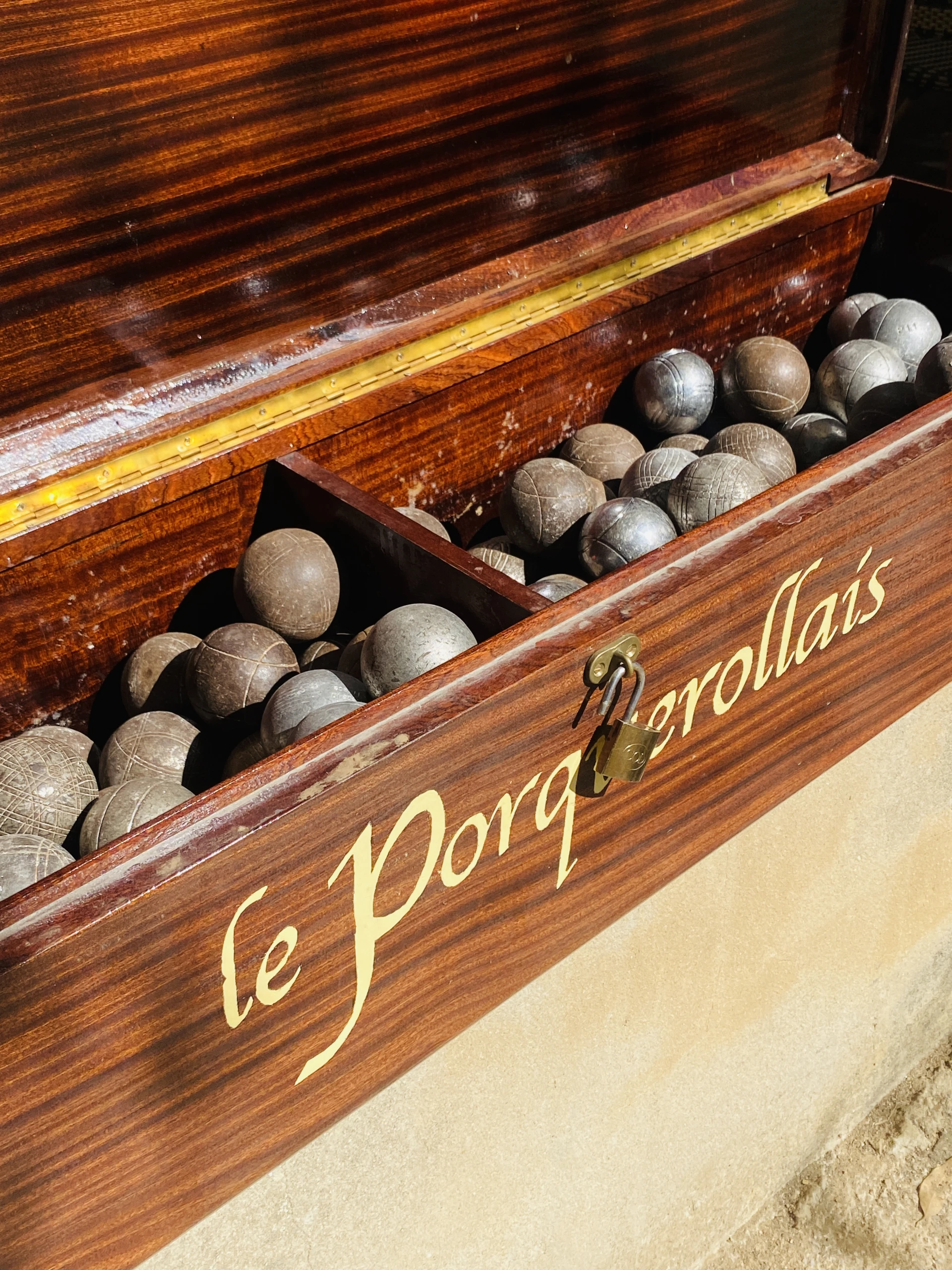
There's a large wooden chest filled with boules, and anyone can join in. Inside, a cabinet is reserved for the locals. Each drawer has a brass nameplate and holds someone's personal set of boules. It's a small detail, but one that tells you something about the place. This isn't simply a restaurant with a pleasant terrace; it's somewhere people have been coming back to for years.
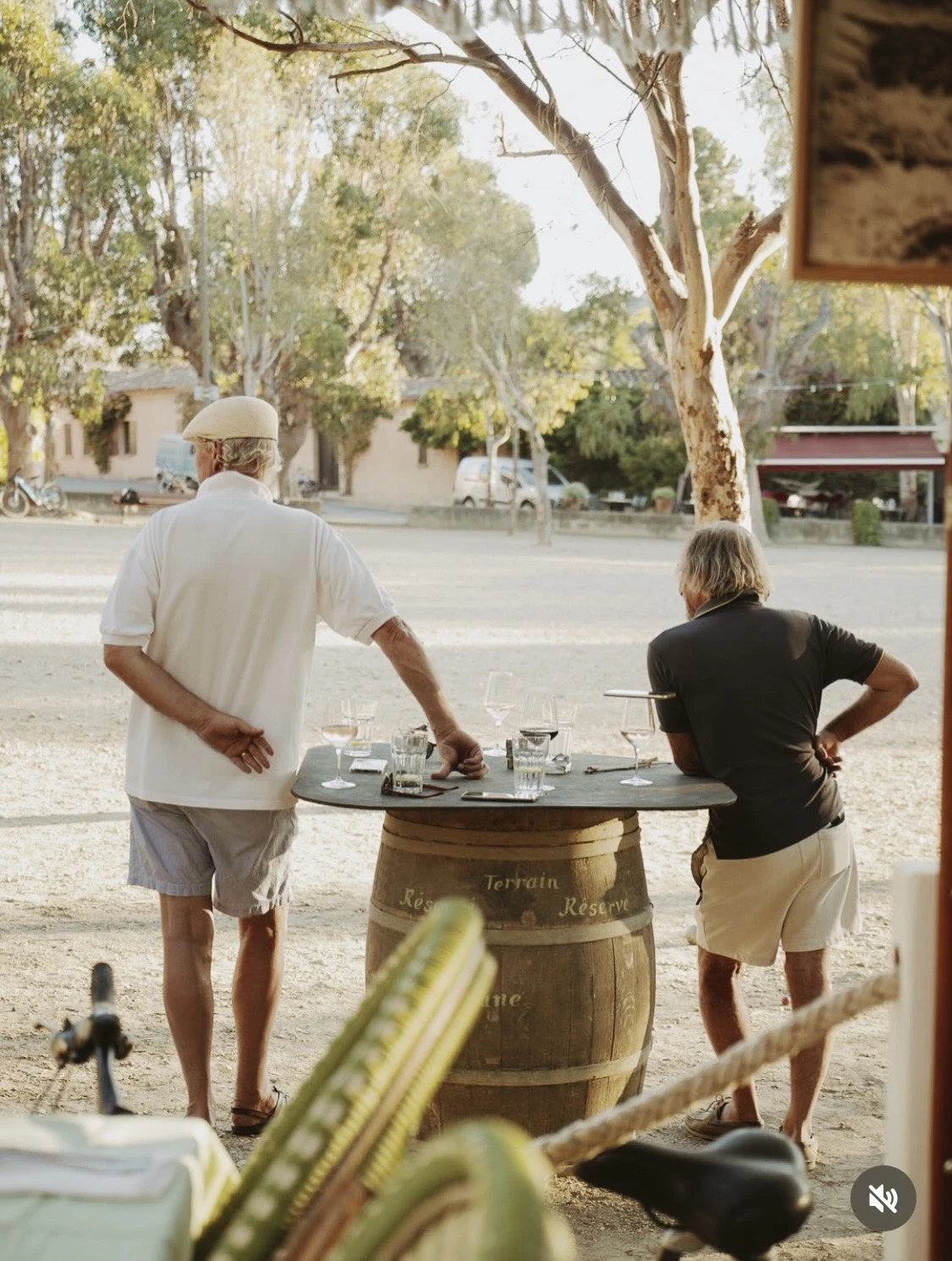
We ordered a pastis and watched the games begin. Some people were already playing, others stopped to watch, and a few more joined in. There was no particular occasion, no event to draw people together. It was simply what happened at the end of the day.
It's one of the reasons I like staying here so much. Locals come for their usual game, visitors join in, and everyone seems to find their place around the square.
Porquerolles is known for its beaches, and the Fondation Carmignac is worth the trip in itself. But I also liked discovering the island through these smaller moments: lunch on the village square, a quiet cove found along the way, and a game of pétanque as the afternoon came to an end. In autumn, you get to see a little more of the life that carries on here long after the summer visitors have left.
Travel Notebook - Porquerolles
- Stay: Le Porquerollais
On the island of Porquerolles, just off the coast of Hyères, this small hotel-restaurant sits quietly on the edge of the village square, under the eucalyptus trees. It feels less like a hotel and more like a family house that happens to serve some of the best seafood on the island.
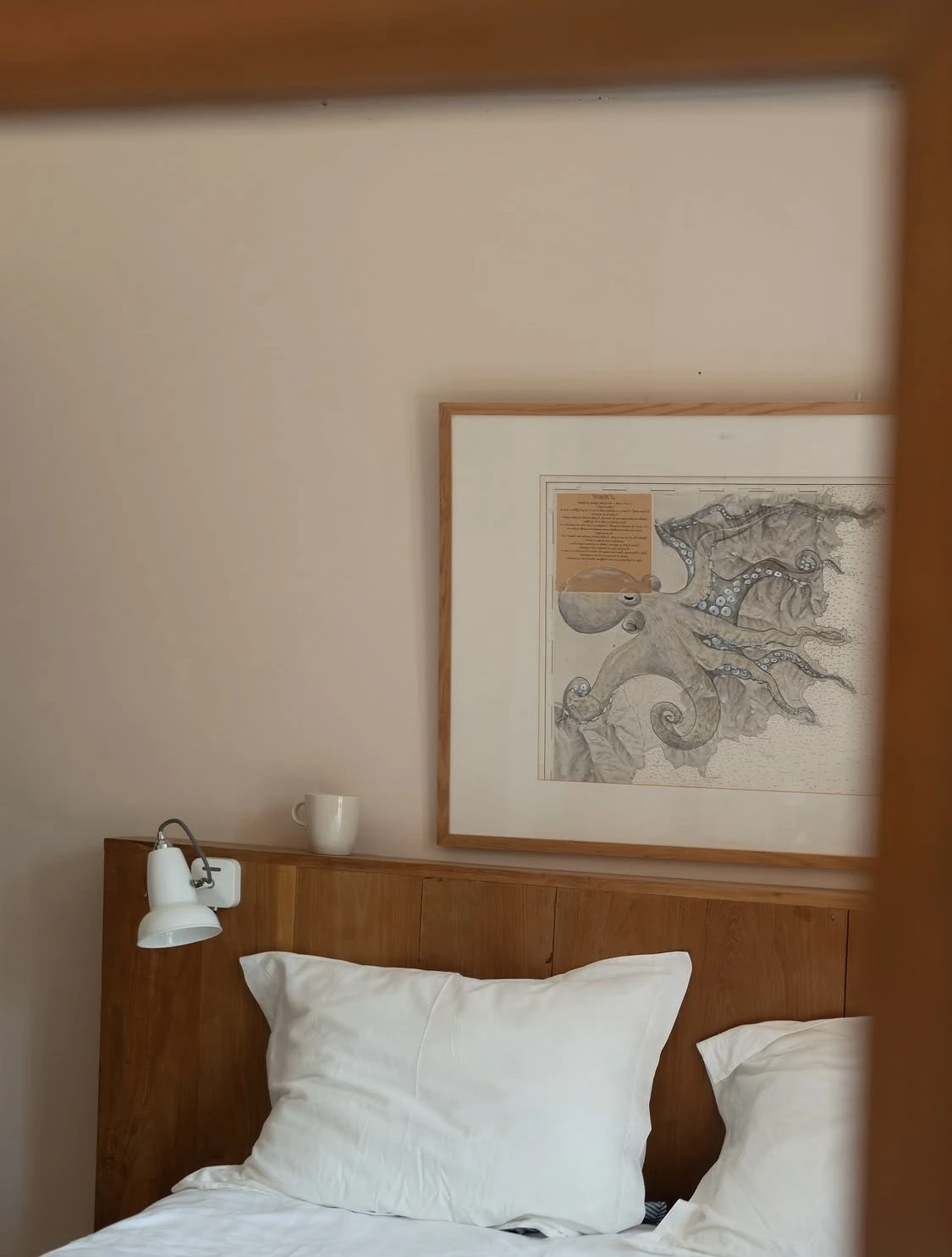 Originally built around a fisherman’s restaurant, it has remained rooted in that identity. The rhythm here is shaped by the sea: fishermen arriving in the morning, a changing daily catch, and long, unhurried meals that draw both locals and returning guests.
There are only a handful of rooms, and the atmosphere remains intentionally unpolished in the best sense.
2. Visit: Fondation Carmignac
The Fondation Carmignac is a contemporary art museum set among pine trees and Mediterranean gardens on Porquerolles. The collection combines art and nature, with sculptures outdoors and galleries partly hidden beneath the landscape. Inside, you explore the exhibition barefoot, with daylight filtering through a ceiling of water. It’s worth visiting for both the art and the unusual architecture.
3. The Blue Bike
There are many places to rent a bikes, but I recommend the classic blue bikes from Porquerolles a Velo . This really is the best way to discover the island. From the famous Plage de Notre -Dame to hidden coves, vineyards and forests.
4. Shop: Noona Ilios
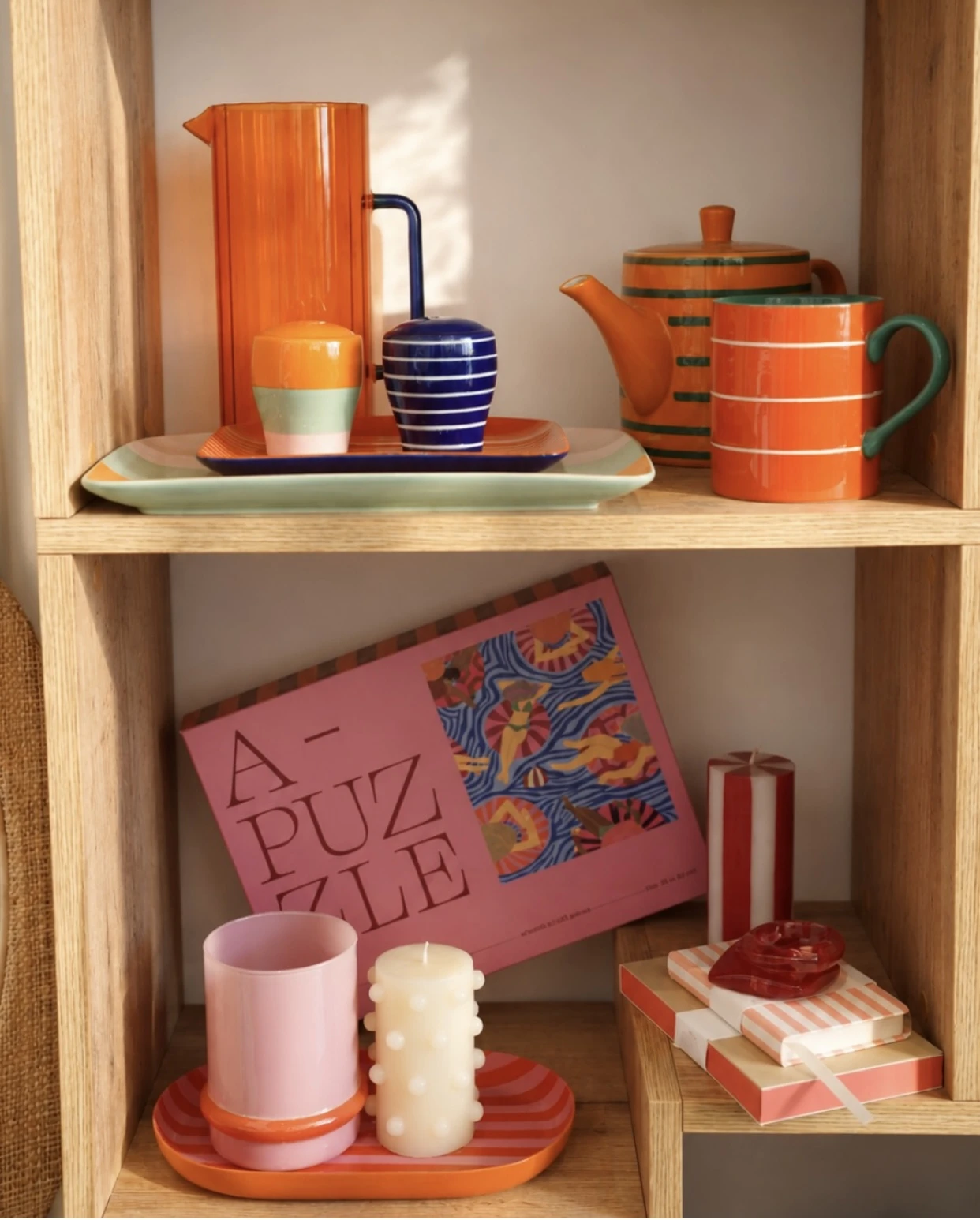
Inspired by sun-drenched destinations, this lovely shop brings together beautiful ceramics, wicker furniture, clothes and jewellery. I love everything here. You’re almost certain to leave with something.
5. Pétanque
There is really only one place, Le Porquerollais. There's a large wooden chest filled with boules, and anyone can join in.
6. Wine: Domaine de la Courtade
A beautiful vineyard on Porquerolles producing organic wines. Order it in a restaurant, stop by to taste their local rosé, white and red wines or take a little taste of the island home with you.
7. Read: “De Persepolis a Porquerolles” by Jalil Nourazar
A story of one man’s life: an Iranian exile who was fortunate and brave enough to leave Persia in time. Guided by the love of his grandmother and mother, he eventually made his way back to France after an extraordinary journey. There, with the love and support of the women who came into his life, he slowly rebuilt himself, finding a sense of peace and a new purpose in devoting himself to others.
Today, on the island of Porquerolles, he welcomes guests to his table, where the memories of a remarkable life are always present.
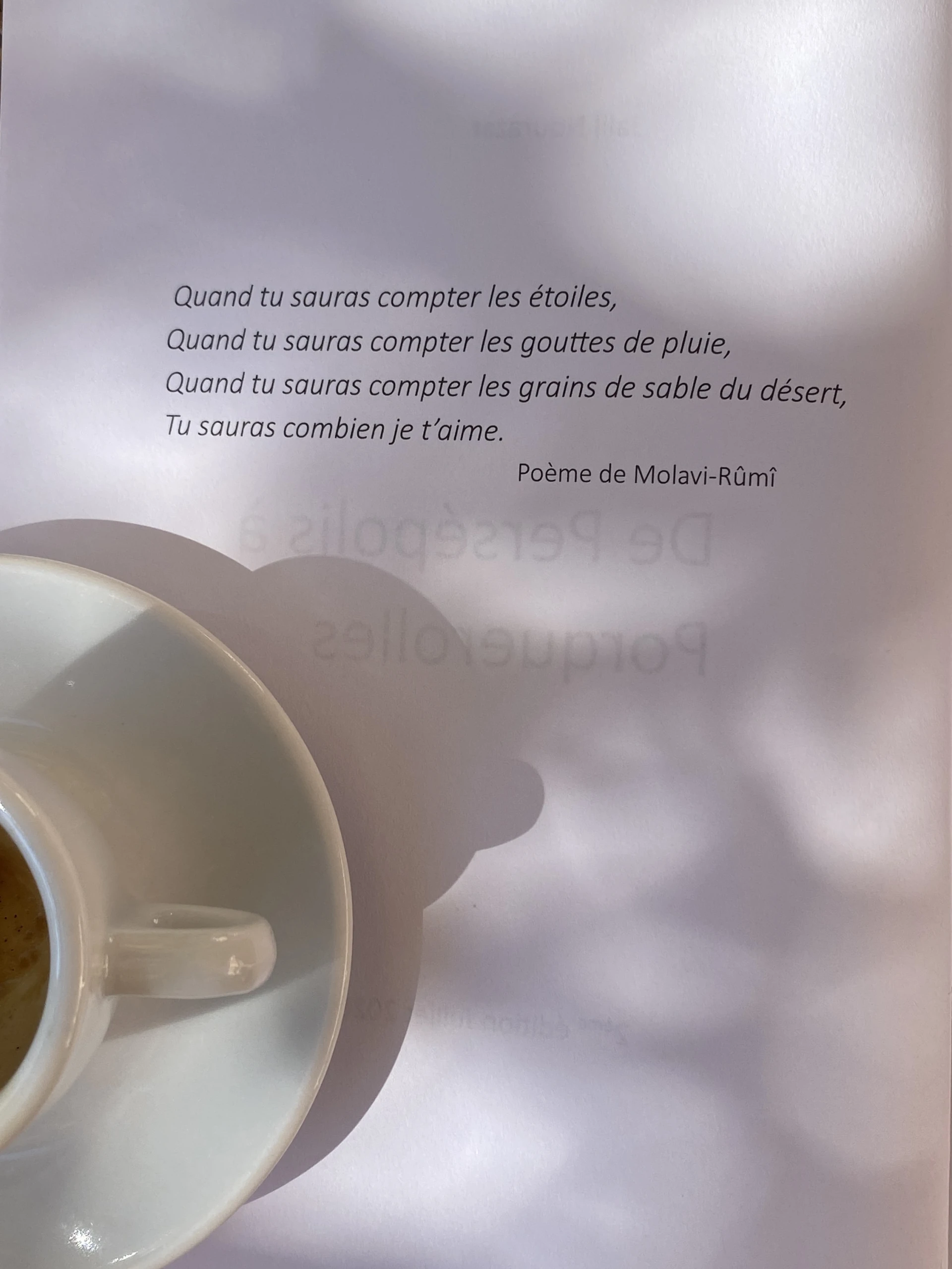
Photo credits : by Garance Bazin
No. 1, 3, 5, 6, 7, 8
 All articles